

Our founder
Sisyphus of Ephyra — Founder, Owner, Driver
We do not diversify. We do not pivot. We push.
Our founder cheated death twice and was sentenced to eternal logistics for it. Experience matters.
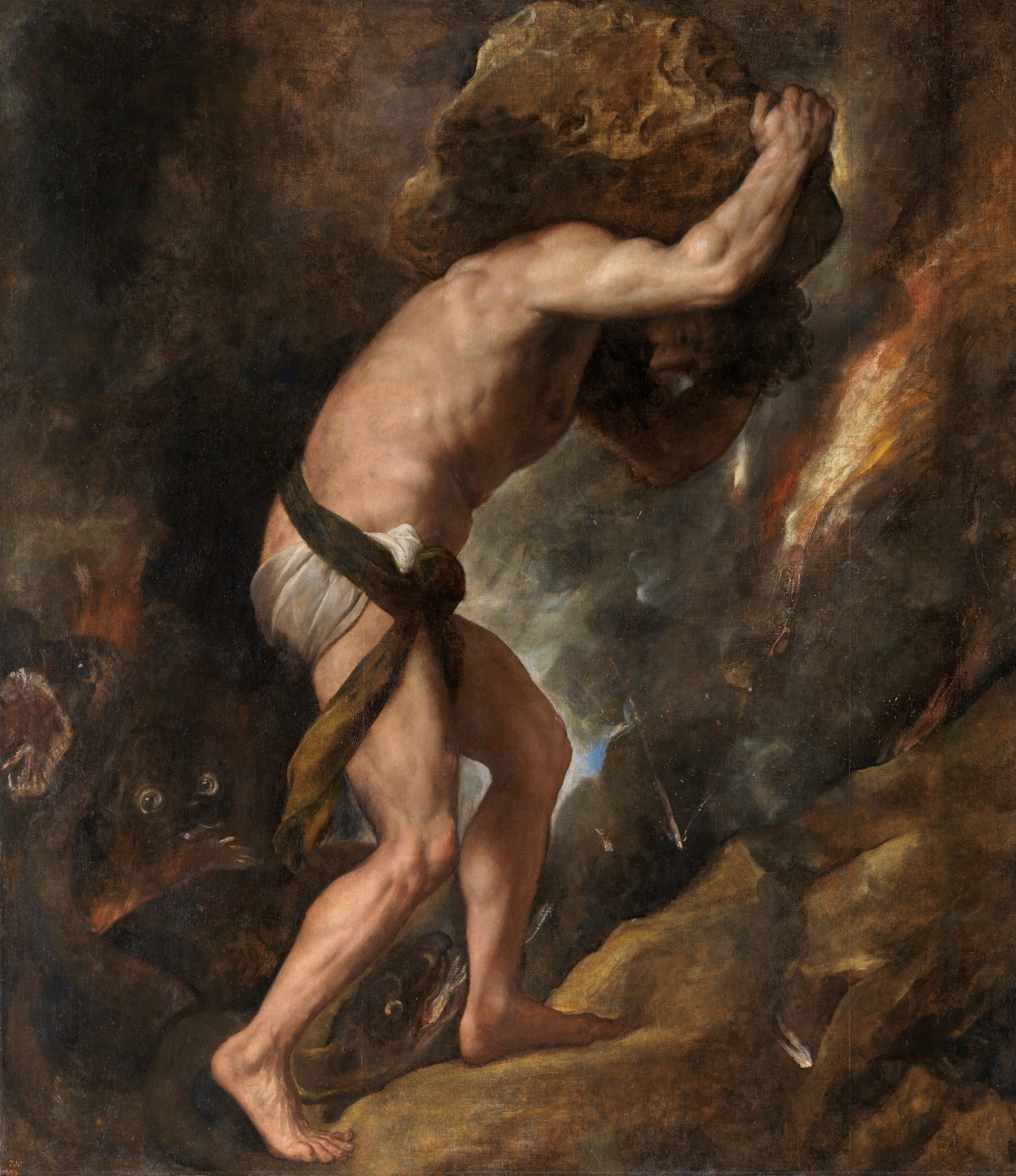
Sisyphus, by Titian, 1548-49. Museo del Prado, Madrid. The company's first performance review.
Career record
King, Ephyra
When the chief executive relocated a river's daughter without paperwork, he disclosed the move directly to the affected stakeholder — priced at one permanent spring, payable to the city. The spring still runs. The executive does not discuss it. The role ended in deposition.
Livestock operator, Corinth
A neighboring operator's herd kept growing as his shrank. He marked the hooves of his cattle and read the theft straight off the road — the first chain of custody in recorded history. The neighbor's operation was wound down.
Warden of Death
During his tenure, mortality fell to zero worldwide and stayed there for the duration of the engagement. Management terminated the program over the objection of everyone it was working for. His release remains disputed.
Retiree, twice
He instructed his wife to withhold his funeral rites, then petitioned the underworld for a brief return trip to reprimand her. The petition was granted. He declined to return for several decades. This remains the only recorded instance of an employee retiring twice.
Driver, Sisyphus Logistics
CURRENTOne route. One load. A perfect attendance record. The position is not vacant.
His day in court
Convicted on all counts of insubordination. Certain parties attempted to introduce murder into the proceedings; no scene, no victim, and no witness was ever produced, and the allegation did not survive review. The convictions stand. No appeal has been filed.
What the press says
— ALBERT CAMUS, THE MYTH OF SISYPHUS, CLOSING PARAGRAPHS (TR. JUSTIN O'BRIEN). REPRINTED UNDER FAIR USE.“All Sisyphus' silent joy is contained therein. His fate belongs to him. His rock is his thing. Likewise, the absurd man, when he contemplates his torment, silences all the idols. In the universe suddenly restored to its silence, the myriad wondering little voices of the earth rise up. Unconscious, secret calls, invitations from all the faces, they are the necessary reverse and price of victory. There is no sun without shadow, and it is essential to know the night. The absurd man says yes, and his effort will henceforth be unceasing. If there is a personal fate, there is no higher destiny, or at least there is but one which he concludes is inevitable and despicable. For the rest, he knows himself to be the master of his days. At that subtle moment when man glances backward over his life, Sisyphus returning toward his rock, in that slight pivoting he contemplates that series of unrelated actions which becomes his fate, created by him, combined under his memory's eye and soon sealed by his death. Thus, convinced of the wholly human origin of all that is human, a blind man eager to see who knows that the night has no end, he is still on the go. The rock is still rolling.
I leave Sisyphus at the foot of the mountain! One always finds one's burden again. But Sisyphus teaches the higher fidelity that negates the gods and raises rocks. He too concludes that all is well. This universe henceforth without a master seems to him neither sterile nor futile. Each atom of that stone, each mineral flake of that night-filled mountain, in itself forms a world. The struggle itself toward the heights is enough to fill a man's heart. One must imagine Sisyphus happy.”